
A carton that has just been sealed should not sit on a bench waiting for someone to pick it up. Neither should a shrink-wrapped bundle, a labelled bottle or a stack of flat packs. When the machine finishes and the next step is still a pair of hands, the line is only as fast as the walk between the two stations.
That gap is usually where a roller conveyor earns its place. Not as a piece of kit bought because the catalogue looked tidy, but as the link that stops product piling up, getting dropped, or waiting on a trolley that never quite arrives.
Minipack Quickshrink supplies roller conveyors, straight conveyors, motorised belts, bent belts, automatic conveyors, loader systems, loading lines and a multi-stacker, all listed under the Conveyors range. Several of those pages say the same practical thing: sizes and lengths vary, and conveyors are custom built to the job. That is the right starting point. A roller conveyor that is the wrong width, the wrong height or the wrong length does not “almost” work. It becomes another obstacle on the floor.
This guide is for operations managers, production managers and owners who are comparing a roller conveyor system before they ask for a quote. It will not pretend one layout suits every factory. It will show what to measure, which type of conveyor usually fits which job, and what to have ready before you contact Minipack Quickshrink.
What a roller conveyor actually does on a packaging line
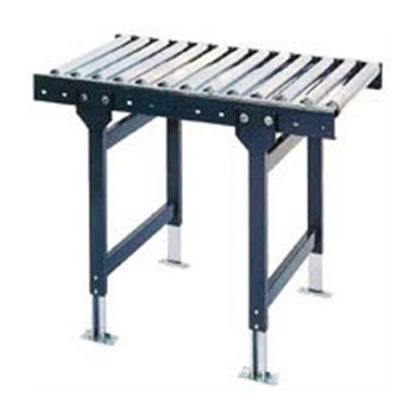
A roller conveyor is a run of rollers in a frame. Product sits on the rollers and moves along them, either because someone gives it a push, because the run is on a slight fall, or because the rollers are driven. On a packaging floor it is rarely the star of the line. It is the bit that keeps the star working.
Think of a food manufacturer in Auckland sealing cartons at one end of the room and staging them for dispatch at the other. Without a conveyor, someone walks each carton across. At twenty cartons an hour that is annoying. At two hundred it is a second job, and the sealer starts waiting because the outfeed bench is full.
The same pattern shows up in other places:
- A shrink wrapper finishes a bundle and the operator has to clear it before the next cycle can start.
- A labeller needs bottles presented at a steady spacing, not dumped in a crate beside the machine.
- A warehouse packs mixed orders onto a bench, then carries them to a pallet station that is only a few metres away, all day.
In each case the machine, or the person, is capable. The hand-off is not. A roller conveyor system is one way to fix the hand-off without buying a faster machine you do not yet need.
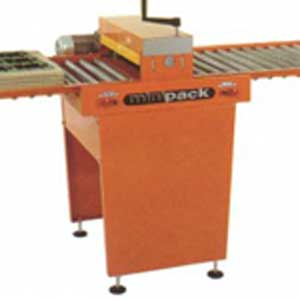
Minipack Quickshrink also builds conveyors that interface with packaging machines. The motorised belt range is described as a complete line of belts that can be used with, and interfaced to, packaging machines, designed to be combined into existing production lines. That matters if the conveyor is not a standalone bench. If it has to take product from a sealer, a wrapper or a labeller, the hand-off height and the way product is presented are part of the specification, not an afterthought.
Rollers, belts and the other options in the range
“Roller conveyor” is the term most people search. It is not always the right surface. Before you lock in a roller conveyor nz suppliers can build, it helps to know what else sits in the same category, because the wrong surface is a common reason a cheap conveyor gets replaced within a year.
Gravity or idle rollers
Idle rollers, the ones that are not driven, suit cartons, trays and other items with a flat, firm base. A person pushes the load, or a gentle fall does the work. They are simple, they do not need a motor on every section, and they are often the right first step when volume is rising but not yet high enough to justify a driven line.
They struggle with bags, soft packs, very small items and anything that can sit between the rollers. A poly bag of hardware will not roll cleanly. A tray of muffins in a soft sleeve may not either. If the base is uneven, or the pack is lighter than the roller spacing can support, look at a belt instead.
Motorised belts
A motorised belt carries the product on a continuous surface rather than on rollers. Minipack Quickshrink’s motorised belt range is built to interface with packaging machines and to be combined into an existing line. That is the usual choice when product has to move at a set pace, when the pack is soft or irregular, or when the next machine needs a controlled infeed rather than a shove from an operator.
Belts also make more sense where you cannot rely on a fall. A level run between two machines, with no one standing there to push, needs drive.
Bent belts
Not every line is a straight shot down a wall. A bent belt changes direction so product can turn a corner without a person lifting it off and putting it back on. Minipack Quickshrink lists a bent belt in the same motorised belt family, again intended to interface with packaging machines and to be combined into existing lines. If your floor plan has a column, a doorway or a second process sitting at ninety degrees, say so early. Forcing a straight conveyor around a corner with a manual lift defeats the point of buying it.
Straight, automatic and loading equipment
Alongside rollers, the Conveyors category includes a straight conveyor, an automatic conveyor, a loader system, a loading line and a multi-stacker. The published descriptions are short on purpose: each comes in different sizes and lengths, and Minipack Quickshrink custom builds them to the operation.
Treat the names as clues, not as a promise that one model number will match your sketch.
- A straight conveyor is the simple run: in at one end, out at the other, length and width set to your product and your floor.
- An automatic conveyor is the option to discuss when product needs to move without someone pushing each pack, and when the conveyor has to keep time with a machine rather than with a person.
- A loader system or a loading line is worth raising when the problem is not just moving product along, but getting it onto the line, or off it, in a controlled way. Hand-loading a fast machine is a classic bottleneck. The machine is ready. The person feeding it is not.
- A multi-stacker comes into the conversation when finished packs need to be stacked rather than left in a single layer for someone to pick up one by one.
None of these pages publish a fixed speed, a fixed width or a price. That is useful to know before you compare quotes that look precise. If a supplier quotes a metres-per-minute figure without asking what you are moving, treat the number as a guess.
When a business has outgrown carrying product by hand
There is no magic carton count that says “buy a conveyor today”. The better test is what the hand carry is doing to the rest of the line.
Look for these signs.
The packing or sealing station stops because the outfeed is full. The machine is not slow. There is nowhere for the last carton to go, so the operator pauses, clears a pile, and starts again. A short roller conveyor off the back of the machine often removes that pause before you spend money on a faster sealer.
People are walking the same three or four metres, all shift, with a carton in their hands. It feels minor. Add it up across a day and it is a chunk of a wage, plus the odd dropped corner and the odd strained shoulder. Warehouses notice this first at dispatch, where sealed cartons move from a pack bench to a pallet station that never quite gets a permanent path.
Product arrives at the next machine in a jumble. A labeller, a wrapper or a check process that needs packs in a row will run badly if someone dumps a crate beside it. A conveyor does not replace good presentation, but it gives you a place to create a queue instead of a pile.
You are about to add a second shift or a busier season and the only plan is “everyone will move faster”. Peak weeks in food and in wholesale dispatch are when hand carrying falls apart. A conveyor specified for the busy week, not the quiet Tuesday, is the one that still makes sense in March.
You already own good machines and they do not talk to each other. A shrink tunnel at one height, a carton sealer at another, and a metre of dead floor between them. Connecting them is often a better spend than replacing either machine. Minipack Quickshrink’s motorised belts are specifically described as able to be combined into existing production lines. That is the conversation to have if the line is already partly built.
If none of those are true, and one person comfortably keeps up while product moves a short distance a few times an hour, a conveyor can wait. Buying one to look more automated is an easy way to spend money on a frame that collects dust.
What to measure before you ask for a roller conveyor
Because these conveyors are custom built to size and length, the quality of the quote depends on the quality of the brief. Turn up with “we need a roller conveyor, about yay long” and you will get a price that has to be redone once someone sees the floor. Turn up with the notes below and the recommendation can be specific.
Product, not just the carton. Note length, width, height and weight of the heaviest and the lightest pack, not an average. A roller conveyor that carries a 15 kg carton may let a 400 g retail box sit between rollers or tip at a join. If you run more than one pack size, list the range. Soft bags, bottles, trays and shrink-wrapped bundles behave differently from a taped carton. Say which ones must travel on the same run.
How product has to arrive. Does the next station need packs in single file, or is a loose queue fine? Does an operator still place each item, or should the conveyor present them? A gravity roller is often enough for cartons heading to a pallet. It is a poor answer for a machine that must be fed at a steady rate.
Heights at both ends. Measure the outfeed height of the machine you are leaving and the infeed height of the machine or bench you are joining. A mismatch means a slope, a lift, or a bent section. Slopes that are too steep let cartons run away. Slopes that are too flat do nothing. If you are not sure of the numbers, a photo with a tape measure in frame is better than a guess.
The actual floor. Measure the clear run, including door swings, forklift paths, columns and the space an operator needs to stand. A conveyor that blocks the only pallet-jack aisle will be hated within a week, however well it moves cartons. Note whether the run must be moved for cleaning, or fixed in place. Food sites often need the line to come apart or to sit far enough off the floor to wash under. Do not assume a general industrial conveyor layout will satisfy that without being asked.
Volume, in real units. Packs per hour on a normal day, and packs per hour on the busiest day you actually ran last year. “We are growing” is not a specification. “We seal about 80 cartons an hour now and we hit 140 before Christmas” is. Also note whether product arrives in bursts. A machine that dumps ten cartons in a minute, then sits idle, needs accumulation space. A steady trickle may not.
What it connects to. Name the machines. A carton sealer, a shrink wrapper, a labeller, a pallet station, a loading dock bench. If the conveyor must take a signal from a machine, or stop when the next station is full, say that. An idle roller cannot do that on its own. An automatic conveyor or a motorised belt might, but only if that behaviour is designed in. The published pages do not list control options, so this is a question for the team, not something to assume from a photo.
Power, cleaning and the room. Driven belts and automatic conveyors need power where the motor will sit, not where it is convenient to imagine it. Washdown areas, cold rooms and dusty packing halls all change what is sensible. If the conveyor will live next to food, say so. If staff must reach across it, the width is a safety question as well as a product question.
Room to grow. A conveyor built exactly to today’s volume, with no extra length for a queue, is the one you outgrow first. You do not need to buy the ten-year line now. You do need to know whether a second machine might sit beside this one, and whether the frame should allow another section later. Minipack Quickshrink custom builds to the need you describe. Describe the next step as well as the current one.
Mistakes that make a conveyor quote useless
A few patterns show up often enough to name them.
Buying on length alone. A six-metre conveyor is not a specification. Width, roller pitch, height, drive and what sits at each end decide whether it works. Length is the easy number and the least important one if the others are wrong.
Copying a photo from another factory. Their cartons, their aisle and their machine heights are not yours. A straight conveyor that looks right in a brochure can be the wrong shape once it meets your shrink tunnel.
Ignoring the soft packs. If even 10 percent of what you move is a bag or a loose bundle, a roller-only line will need a workaround on day one. Either split the flow or put a belt on the section that carries the awkward product.
Forgetting the person. Conveyors remove walking. They can also create new reaching, new pinch points and a new habit of perching cartons on the frame. Leave space for the operator who still has to sleeve, label or check. A line that only works if nobody stands beside it will not survive a real shift.
Treating the conveyor as separate from the machines it feeds. The point of the Minipack motorised belt range is that it can be interfaced to packaging machines. If you buy the conveyor from one place and the wrapper from another, someone still has to make the heights, speeds and stops agree. Buying the connection from the same supplier as the packaging machine is often the simpler path, especially when the rest of the line is already Minipack equipment.
Skipping service. A conveyor is simple until a belt tracks off, a roller seizes or a sensor stops the automatic section. Minipack Quickshrink’s packaging machine servicing covers installation of its machines in New Zealand, routine and unscheduled maintenance contracts, repair by specialist technicians, and technical support at the customer’s premises. Ask how the conveyor will be supported before it is on the floor, not after the first stoppage on a Friday dispatch.
A short way to narrow the choice
You do not need an engineer’s drawing to have a useful first conversation. This is a practical sort, not a rule.
If you are moving firm cartons a short distance and someone is already standing at the bench, start with a roller conveyor. Idle rollers are often enough. Ask about a slight fall only if product must move without a push, and only after the heights have been measured.
If product is soft, small, round or unstable on rollers, start with a motorised belt. The same applies if the next machine needs a controlled feed rather than a queue that an operator pulls from.
If the path turns a corner, ask about a bent belt instead of planning a manual lift at the turn.
If the real problem is getting product onto a machine, or taking a stream of finished packs and stacking them, raise the loader system, the loading line or the multi-stacker. A longer roller run will not fix a feeding problem.
If the conveyor must keep pace with a packaging machine and stop when that machine stops, talk about an automatic conveyor or a motorised belt that can be interfaced, and bring the machine name with you.
If you are in Auckland and want to see how a line is put together before you commit, the servicing page notes a showroom in Auckland that hosts Minipack Quickshrink machines, with commissioning and packaging tests available before you rely on the setup in your own building. A conveyor is awkward to judge from a photo. Seeing the height and the hand-off in person is worth the visit when the line is more than a single straight run.
What to send when you ask for a recommendation
A useful enquiry is short. It is specific. Something like this is enough to start:
- What you pack, and the size and weight range.
- Packs per hour now, and packs per hour at your busiest.
- The machines or benches at each end, with heights if you have them.
- A rough floor length, and any corner, door or forklift path in the way.
- Whether product is a firm carton, a soft pack, a bottle, a tray or a mix.
- Whether you need accumulation, a turn, or a feed into an existing machine.
- Where you are in New Zealand, and whether the conveyor must be moved for cleaning.
Photos of the gap you want to fill help more than a polished paragraph. So does a note about what has already gone wrong: cartons scuffed, people waiting, a machine sitting idle, a season you could not staff.
Commercial takeaway
The right roller conveyor is the one that matches the pack, the heights and the pace you actually run. For many New Zealand packaging lines that means idle rollers for firm cartons and a motorised belt where product must be driven or is too soft to roll. Corners, machine feeding and stacking are separate questions, and Minipack Quickshrink lists bent belts, automatic conveyors, loader systems, loading lines and a multi-stacker for those jobs. All of them are custom built to size and length. A quote built on a guessed length will not survive contact with your floor.
Do not buy a conveyor to match a photo. Buy the connection your line is missing, and leave enough length for the queue you already know appears on a busy day.
If you are comparing a roller conveyor system for a factory, warehouse or dispatch area in New Zealand, talk to Minipack Quickshrink before you settle the layout. The team can look at the pack you are moving, the machines it has to meet, and whether rollers, a belt, a loading line or a combination is the sensible build. Call 0800 747 465, phone (09) 275 7488, or send the measurements through the contact page to contact Minipack Quickshrink.
Common Questions About Roller Conveyors
What is a roller conveyor used for in packaging? A roller conveyor moves cartons, trays and other firm packs between packing, sealing, wrapping and dispatch without someone carrying each one. On a packaging line it usually clears the outfeed of a machine or creates a queue for the next station. It is a linking tool. It does not seal, wrap or label on its own.
Is a roller conveyor the same as a belt conveyor? No. A roller conveyor carries product on a series of rollers. A belt conveyor carries it on a continuous belt. Firm cartons often suit rollers. Bags, soft packs and product that must move at a controlled speed usually suit a motorised belt. Minipack Quickshrink supplies both, including belts designed to interface with packaging machines.
When should a business choose a gravity roller conveyor? Gravity or idle rollers suit firm, flat-based packs moving a short distance, especially where a person is already at the bench to give the carton a push, or where a slight fall can do that work. They are a poor fit for soft bags, very small items, or any line that must feed a machine at a set rate with nobody standing there.
Does Minipack Quickshrink build roller conveyors to a set size? The roller conveyor, straight conveyor, automatic conveyor, loader system, loading line and multi-stacker pages all state that these come in different sizes and lengths, and that Minipack Quickshrink custom builds conveyors to the customer’s needs. There is no single standard length to order off the page. The brief you send decides the build.
Can a conveyor be added to machines the business already owns? Often, yes, if the heights, the product and the pace can be matched. Minipack Quickshrink’s motorised belts are described as able to be combined into existing production lines and interfaced to packaging machines. Bring the make and outfeed height of the current machine. A conveyor that does not meet the machine is just another bench.
What information is needed before requesting a conveyor quote? Send the product size and weight range, packs per hour on a normal day and on a busy day, the height at each end, the clear floor length, and anything in the way, such as a door, a column or a forklift path. Note whether packs are cartons, bags, bottles or a mix, and whether you need a corner, a stack or a feed into a machine. Photos of the gap help.
Are conveyor speeds and prices listed on the website? No. The conveyor product pages do not publish speeds, load ratings or prices. They state that conveyors are custom built. Any speed or price figure needs to come from a recommendation based on your product and layout, not from a generic listing. Ask the team to price the layout you measured, not a guessed length.
Why does local support matter for a conveyor? A conveyor sits in the middle of the line. When a roller seizes, a belt tracks off or an automatic section stops, packing stops with it. Minipack Quickshrink installs its machines in New Zealand, offers routine and unscheduled maintenance contracts, and provides technical support at the customer’s premises, with specialist repair available through the Auckland office. That support is part of the purchase, not a later extra.