
Pallets leaving the warehouse with loose film. Stock shifting halfway through a trip. A wrap job that pulled three staff off the floor for ten minutes when it should have taken two. If any of that sounds familiar, you already know what manual pallet wrapping really costs. It’s not just the film you’re going through. It’s the labour hours, the damaged goods coming back, and the freight claim someone has to fill out on a Monday morning.
Choosing a pallet wrapper looks straightforward until you actually start comparing models. Manual, semi-automatic, fully automatic, turntable, ring style, with a ramp or without one. Every supplier says their machine solves the problem, but what works for a small distribution business rarely suits a high-volume food manufacturer running three shifts.
So how do you actually choose a pallet wrapper that fits your operation rather than someone else’s? This guide breaks down what matters most, so operations managers, warehouse managers and procurement teams can base the decision on their own throughput, floor space and product type, not a sales brochure.
Why Pallet Wrapping Turns Into a Problem as Volume Grows
Most businesses start out wrapping pallets by hand, and honestly, for low volumes that’s fine. Trouble starts once order volume climbs and the same wrapping process is still expected to keep pace. A warehouse sending out ten pallets a day might now be sending forty, and wrapping quietly becomes the bottleneck nobody budgeted for.
Inconsistency is usually the first sign. One person wraps tight, another leaves the top loose, and you end up with a batch of pallets that all behave differently in transit. That inconsistency shows up later as freight damage, shifted stock, or product arriving in poor condition. A growing distributor already juggling manual carton sealing often finds pallet wrapping is the process that falls behind first, simply because there aren’t enough hands to do everything well.
There’s a labour angle too, and it’s easy to underestimate. Wrapping pallets by hand is repetitive and physically tiring, and every minute spent on it is a minute not spent picking, packing or getting orders out the door. As wages climb and order volumes grow at the same time, dedicating a staff member to pallet wrapping full time starts to look like an expensive way to solve a problem a machine could handle faster.
Manual, Semi-Automatic or Fully Automatic: What’s Actually Different
Before comparing individual machines, it helps to know where each broad category fits.
Manual Pallet Wrappers
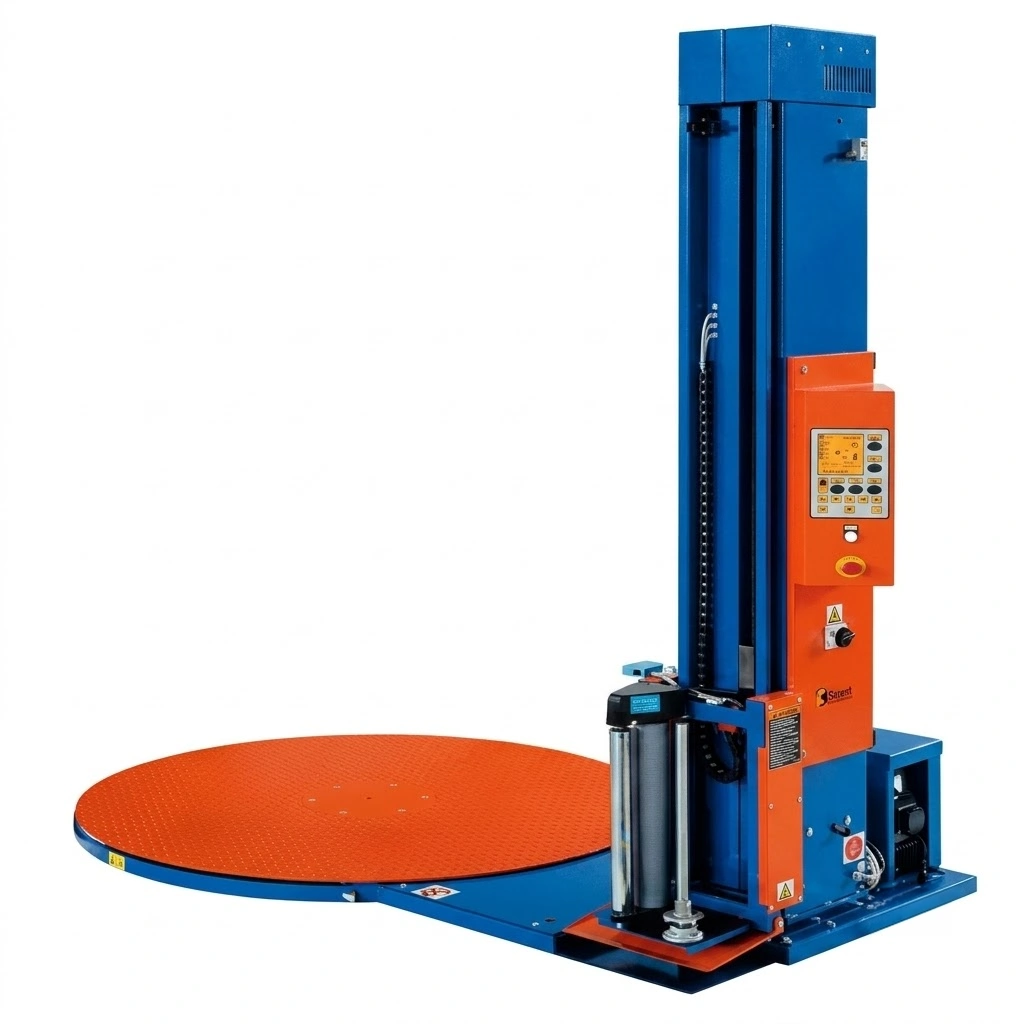
Think turntable style. The operator loads the film and guides the process while the machine handles rotation and film tension. It’s a practical starting point for smaller operations or businesses with lower, less predictable volumes, and it strips out a lot of the physical strain of wrapping by hand without the upfront cost of a bigger system. Plenty of businesses start here and scale up once volume justifies it.
Semi-Automatic Pallet Wrappers
These take over more of the cycle. You still start and manage the process, but height detection, film tension and the wrapping cycle itself run automatically. It’s usually the next step once a warehouse or food manufacturer has outgrown manual wrapping but doesn’t quite have the volume, or the floor layout, to justify going fully automatic. A lot of businesses land here once inconsistent hand wrapping becomes too obvious to ignore.
Fully Automatic Pallet Wrappers
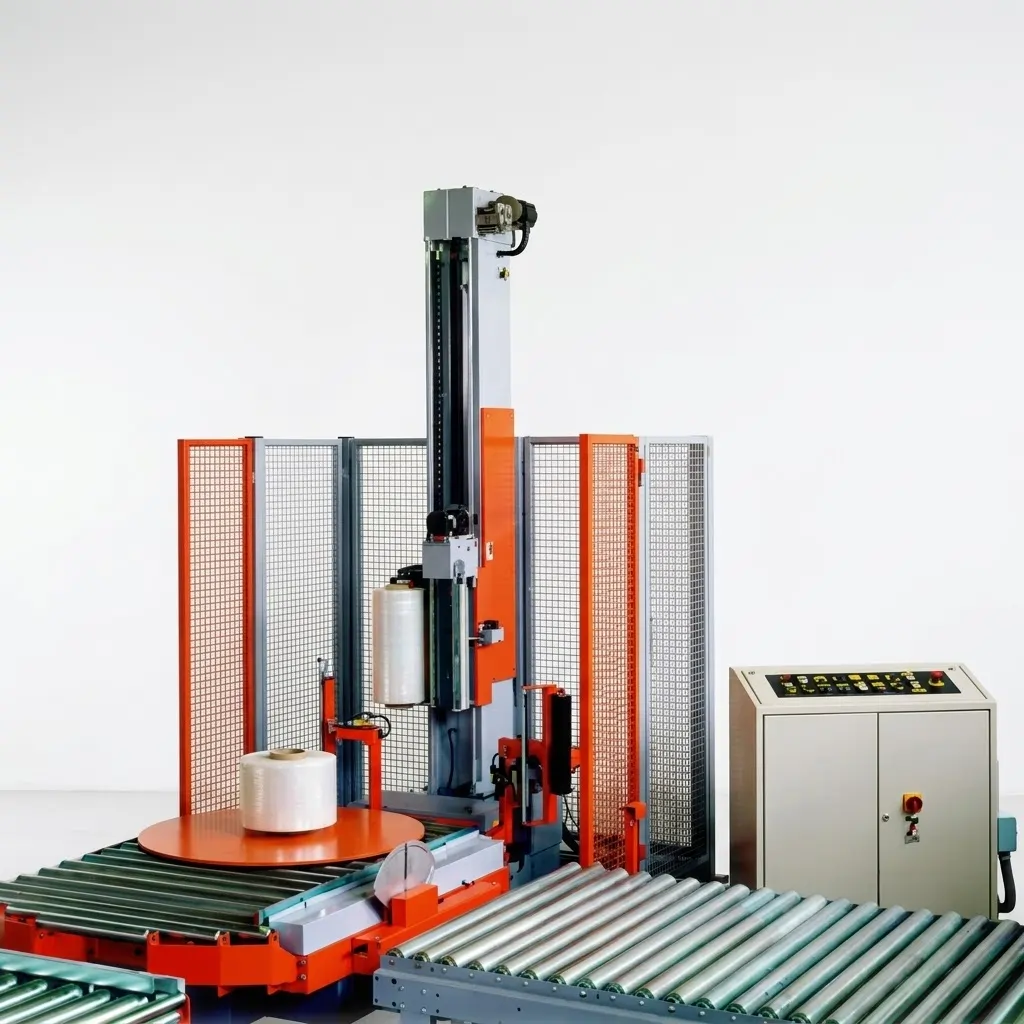
At the top end, fully automatic systems, including robotic wrapping units, are built to sit inside a packaging line with almost no operator involvement. Pallets move through continuously, which suits higher volume operations where consistency and speed carry more weight than upfront cost. This tier only really makes sense once wrapping has become a genuine bottleneck rather than an occasional headache.
Minipack Quickshrink supplies across all three tiers, from manual and semi-automatic models such as the FP-10 and FP-ECO through to fully automatic wrapping robots, plus a wider pallet wrapper range that includes extended column and fork mounted configurations for warehouses with different layouts.
Buying Considerations Before You Commit
Anyone working out how to choose a pallet wrapper ends up asking the same handful of questions, no matter what industry they’re in.
Pallet Volume and Throughput
How many pallets are you actually wrapping per day or per shift, and where is that number heading over the next two to three years? Size a machine for today’s volume with no room to grow and you’ll be replacing it sooner than you’d like. Size it well beyond current needs and you may have paid for capacity you won’t use for years.
Load Type and Stability
A pallet stacked with uniform cartons behaves nothing like an irregular or unstable load once film goes on. Food manufacturers, pharmaceutical businesses and industrial goods suppliers all deal with different load shapes, and that shapes which wrapping pattern and film tension actually works.
Floor Space and Layout
Turntable machines need clear space to rotate. Ring style and automatic in-line systems bring different footprint and clearance needs again. Measure your available floor space before you fall in love with a model that, once it arrives, simply won’t fit where you need it.
Fitting Into the Rest of Your Line
If pallets are already moving through a packing or dispatch process, think about how wrapping connects to that. Businesses running product through conveyors as part of dispatch often find an automatic pallet wrapper slots into that flow far more naturally than a standalone turntable unit does.
Film Type and Usage
The machine and the film work as a pair, and mismatching film width, gauge or type for a given machine tends to mean more film used, poorer load stability, or film breaking mid wrap. Minipack Quickshrink supplies stretch film suited to pallet wrapping, and it’s worth talking to a supplier about matching film to your machine rather than guessing.
Servicing and Support
A pallet wrapper is production equipment, and like any machinery it will need maintenance, adjustment or the odd repair down the track. Checking what local packaging machine servicing looks like before you buy, rather than after something breaks down, is a step too many businesses skip.
Mistakes Businesses Keep Making
A handful of patterns come up again and again. Buying purely on price without matching the machine to real pallet volume is a common one, and it usually means replacing the machine again within a year or two once volume outgrows it. Ignoring floor space and clearance is another, and it’s a frustrating one to discover after delivery. Treating pallet wrapping as an isolated purchase rather than part of the wider dispatch line is a third, and it often means missing a chance to improve the whole workflow at once rather than just one step of it.
There’s also a tendency to assume one style of pallet wrapper will suit every part of the business. A distribution centre handling several product types and load shapes might genuinely need to compare more than one configuration instead of expecting a single machine to do it all equally well.
The Commercial Case for Moving Off Manual Wrapping
Moving from manual wrapping to a machine, or upgrading from a basic machine to something more automated, usually comes down to a few practical drivers rather than one dramatic trigger. Consistent wrapping cuts down the freight damage and returns that come from unstable pallets. Freeing staff from repetitive wrapping means they can go back to picking, packing or dispatch, which matters more every year as labour costs rise. Matching machine and film correctly can also cut down on film wasted through inconsistent hand wrapping.
The commercial takeaway here is fairly simple. Machinery selection should follow your actual pallet volume, your product and load type, your floor space, and where the business expects to be in a few years, not the cheapest option on the table or the flashiest one. A supplier who actually understands your operation can match those factors to the right machine, rather than leaving you to figure it out from a spec sheet alone.
What to Have Ready Before You Ask for a Quote
Before you contact a supplier, gather a few details first. Typical pallet dimensions and weight. How many pallets you wrap per day or per shift. What kind of product you’re wrapping and how stable it naturally is. How much floor space you actually have. Whether volume is likely to grow soon. Turn up with that information ready and the conversation can go straight to which machine suits your operation, instead of starting from zero.
There isn’t a single best pallet wrapper out there. There’s only the right pallet wrapper for your pallet volume, your product, your floor space and where your business is heading. Whether that ends up being a manual turntable machine, a semi-automatic model, or a fully automatic system built into a wider packaging line comes down to the specifics of how you operate, not what worked for the business down the road.
If you’re weighing up manual, semi-automatic or fully automatic options, or you’d just like a second opinion on which pallet wrapper actually suits your warehouse, contact Minipack Quickshrink and talk through your pallet volume, product range and floor space with a team that supplies across the full range of packaging machinery.
Pallet Wrapper Frequently Asked Questions
What is the difference between a manual and an automatic pallet wrapper? A manual pallet wrapper is a turntable machine that you load and guide yourself, while an automatic version handles the wrapping cycle, film tension and rotation with little to no input from an operator. Manual machines suit lower or less predictable volumes. Automatic systems make more sense once volume and consistency matter more than upfront cost.
How do I know if my business has outgrown manual pallet wrapping? Watch for inconsistent wrapping between staff, rising freight damage or returns, wrapping becoming a bottleneck before dispatch, and staff spending real chunks of the day wrapping pallets by hand instead of picking or packing. If these show up regularly rather than occasionally, it’s worth comparing semi-automatic or automatic options.
What size pallet wrapper do I need for my warehouse? There’s no fixed answer. It depends on your daily pallet volume, product type, load stability and available floor space. A business wrapping a handful of pallets a day has very different needs to one wrapping dozens per shift, so it’s worth discussing your actual throughput and layout with a supplier before settling on a model.
Can a pallet wrapper reduce freight damage? Consistent, correctly tensioned wrapping keeps pallet loads more stable during transport, which cuts down on the shifting and loosening that often causes freight damage. How much improvement you see depends on your current wrapping consistency, load type and the machine and film combination you use, so results vary between businesses.
What film should I use with a pallet wrapper? The right film depends on your load type, your machine and the stability you need, and using film that doesn’t match your machine settings can mean more film used or a less stable load. Minipack Quickshrink supplies stretch film suited to pallet wrapping and can help match film specification to your machine rather than leaving you to guess.
Do pallet wrappers need regular servicing? Yes. Like any production machinery, pallet wrappers need regular maintenance to keep wrapping consistent and avoid unplanned downtime. Knowing what local servicing and technical support looks like before you buy, rather than scrambling for it after a breakdown, is a step worth taking seriously alongside choosing the machine itself.
How much floor space does a pallet wrapper need? Turntable machines need clear space around the pallet to rotate, while ring style and automatic in-line systems bring different footprint and clearance requirements. Measuring your available floor space before comparing machines helps you avoid choosing a model that doesn’t actually fit your warehouse layout once it arrives.
What information should I provide when requesting a pallet wrapper quote? Have your typical pallet dimensions and weight ready, along with your daily or per shift pallet volume, product and load type, available floor space, and any expected growth. Turning up with these details lets a supplier recommend machinery suited to your operation straight away, rather than starting the conversation from scratch.