

Hand taping still works for a New Zealand business that closes a modest number of cartons each day. It becomes a problem when the rest of the line has sped up and the end of the line has not. Filled cartons sit on a bench, a second person gets pulled off another job to keep up, and the seal depends on who was holding the tape gun that shift.
That is the point where a carton sealer machine is worth a proper look. Not because a catalogue says automation is the next step, but because closing cartons is now slower, less consistent, or more labour-heavy than the work that comes before it. This article explains what that machine does, how it differs from a case erector, and what to measure before asking Minipack Quickshrink which model fits the line.
Why hand taping starts to hold a line up
Closing a carton by hand is a string of small jobs, not one strip of tape. The blank has to be squared, the bottom flaps folded and taped, the carton filled, the top flaps folded, and the top taped. If the first strip looks thin, a second strip often goes on. The finished carton then has to be lifted onto a pallet or a roller.
None of those jobs is difficult. On a busy afternoon they add up. A food manufacturer packing mixed retail cartons may have one person forming blanks while two others tape and stack. A distributor closing internet orders may not notice the cost until Friday, when the people who should be checking picks are still clearing a bench of cartons.
The seal is the other cost, and it often shows up after the carton has left the building. A short strip misses the flap edge. Tape wrinkles and lifts in a humid store room. The bottom is taped after the carton is already heavy, so the tape is holding weight it was never pressed onto properly. The carton can look fine at dispatch and open on a truck between Auckland and Christchurch.
Hand taping also varies from person to person. One operator overlaps the centre seam, another tapes only the top and trusts the bottom because it held yesterday, and a third uses whatever roll is nearest the bench. A carton sealer machine takes that variation out by moving the carton through a set path and applying tape to the top and the bottom in the same pass.
When a carton sealer machine is the right next step
There is no carton count that suits every site. A business closing forty heavy cartons of one size each afternoon can feel more pain than a business closing twice as many light mailers. Watch the bench rather than a rule of thumb.
The signs are usually easy to see:
- Filled cartons queue while the carton in front is still being taped.
- A second person is regularly borrowed from another task to keep the tape gun moving.
- Bottom flaps are taped on the floor or on a low bench because a full carton is awkward to turn.
- Seals fail in transit, or customers mention cartons that arrived partly open.
- Tape use changes from shift to shift even though the order volume has not.
- The same cartons, or a small family of sizes, go out day after day.
- People stay late to finish packing because closing cartons took longer than filling them.
If two or three of those are already normal, the question is no longer whether a hand gun is good enough. It is which machine should take that job, and whether forming the carton is a separate problem.
A simple check is to time ten cartons on a normal afternoon, including finding the tape, folding the flaps and lifting the carton onto the pallet. Time another ten on a Monday morning when the team is fresh. The gap between those two times is often the labour a machine would take off the bench. A sealer does not slow down at 3pm.

What a carton sealer actually does
A carton sealer is not a shrink wrapper, and it is not a machine that builds a carton from a flat blank. It takes a carton that has already been erected and filled, closes the top flaps where the model is built to do that, and applies a strip of adhesive tape to the top and the bottom at the same time.
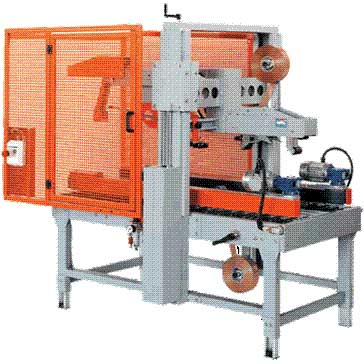
On the Minipack range that work is done with a top and side belt drive, automatic flap closing, and taping heads that can be reloaded without a long stop. The Minipack Fully Automatic Carton Sealer is described as a taping format with a fixed flap closer. Two taping heads apply tape above and below the box together, so the carton does not wait for a second pass.
That top and bottom seal is the practical difference from a hand gun. The bottom is sealed while the carton is supported and moving, rather than after someone has tipped a full box onto its side. The flap closer shuts the top, so the seal does not depend on who had a free hand. The length of tape follows the machine path, which means the strip is less likely to stop short because the roll snagged.
The Minipack Carton Sealing SC1/500-A is the compact version of the same idea. Cartons travel through on a conveyor and are sealed without stopping in the machine. The product page says the seal is there to keep pests out, stop contents spilling, and protect the goods in transit. It also says the machine can be adjusted as sizes change, so a line with more than one carton does not have to treat every changeover as a project.
The Minipack Carton Sealing SC1/500-M suits a tighter brief. It is aimed at fixed format boxes where the height and width stay constant. The carton needs to arrive with the top flaps open, and the flap closer shuts them. A size change is two adjustments, and safeguards are available. If the line runs one or two carton sizes all week, that fixed format is often the cleaner fit. If the height changes through the day, say so before anyone assumes a fixed closer will suit.
Minipack Quickshrink also lists a standard Minipack Carton Sealer with the same top and side belt drive, automatic flap closing and easy tape loading, described as suitable for all types of cartons. The right model depends on the layout. Belt position, carton height, how the box arrives, and how often the size changes matter more than the word automatic on its own. The product pages do not publish speeds or carton dimensions, so those need to be checked against your own cartons rather than assumed.
A sealer and a case erector do different jobs
This is the mix-up that leads to the wrong machine. A carton sealer closes and tapes a carton that already exists as a box. A case erector takes a flat blank, forms it, and seals the bottom so the carton can be filled.
If the slow part of the afternoon is folding flats and taping bottoms before anything goes in, a sealer on its own will not clear that queue. The blanks are still being made by hand. If the slow part is the top tape after the carton is full, an erector will not fix that either. The formed cartons will wait at the bench.
The Minipack Automatic Case Erector is for sites that need more throughput than hand forming can give. It erects the case and seals the bottom. Minipack Quickshrink describes it as suited to medium and higher speed work, where taking forming off the bench changes both the labour and the output. The page does not publish a cartons-per-hour figure, so the comparison has to be made against the rate your own team is actually forming.
A growing line often upgrades in a set order. The top and bottom tape moves to a sealer first, while staff keep forming blanks. Once formed cartons are what the line runs out of, a case erector feeds the front. Some sites need both at once because forming and closing are equally late, and some only need the sealer. Buying both because they appeared together in a brochure is how a small packing room ends up with a machine that has nowhere to stand.
One carton size, a short list, or a different box every order
Carton machinery works best when the box has a shape the belts and the flap closer can trust. A firm corrugated case with square flaps behaves differently from a soft bag, a very light mailer, or a carton that collapses when it is empty. Sort the work before comparing models.
One size through the day
A beverage packer, a parts distributor, or a contract packer running one carton often sits here. Height and width barely move. A fixed format sealer, set once and left alone, is usually the straightforward option. The SC1/500-M is noted as suitable for that constant height and width. When the contract does change, the size change is two adjustments, which is a different job from retuning the machine every hour.
A short list of sizes
Many New Zealand wholesalers run three or four carton sizes, not forty. A compact sealer that can be adjusted as the size changes, without a long stop, fits this better than a machine locked to one format. The SC1/500-A is described as a compact machine for packages of varying sizes, adjusted so sealing does not stall dispatch. Ask how long a real changeover takes on your cartons, and have the blanks ready when you ask.
A different carton on every order
Jobbing work, where the next carton might be any size in the store, is the pattern most likely to disappoint if the machine is chosen for speed alone. Some of that work should stay manual. Some of it can move to a sealer if the unusual sizes are rare and the core sizes are stable. A machine specified for the awkward one-off will be a poor tool for the hundred cartons that look the same.
Tape, flaps, and the cartons you actually ship
A sealer will not repair a carton that is already a problem. Crushed flaps, soft scores, or board so light that the box bows when a belt grips it will show up in the machine rather than disappear. That is useful, provided you expect it.
Bring a sample of the cartons you actually ship, not the tidy ones from the storeroom shelf. Include a carton that has been knocked about, and include the heaviest fill. Side belt machines need a face they can drive. A very short carton, a very tall one, or one with a handle cut in the side should be mentioned before anyone assumes a standard belt path will cope.
Tape is the other half of the seal. The Minipack sealers above apply adhesive tape as a strip above and below the box. Easy tape loading matters on a real shift, because a slow reload becomes its own queue. If the current process uses water activated tape rather than pressure sensitive tape, do not assume the same roll will fit. Minipack Quickshrink lists a separate water activated taping machine for that tape. Say which tape you use now, and whether the seal has to cope with a dusty warehouse, a chill room, or a long freight leg.
Flap condition decides whether automatic closing is realistic. The SC1/500-M expects the carton to arrive with the top flaps open so the closer can shut them. If staff currently tuck flaps in a set order because the product sits above the score, that habit has to be designed out or the closer will fight the fill. An overfilled carton is a packing problem first and a machinery problem second.
Where the sealer has to sit
A carton sealer needs the carton to arrive in a predictable way. On the SC1/500-A, cartons travel along a conveyor and are sealed without stopping. That works when the carton reaches the infeed square, the flaps are in the state the closer expects, and there is a gap before the next box. Pushing cartons in from a pile on the floor is how belts scuff and flaps fold the wrong way.
Look at the space in front of the machine and the space after it, not only at the machine footprint. The sealer may be fed from a packing bench, a checkweigher, or a shrink tunnel. The sealed carton may need to reach a pallet, a roller conveyor, or a dispatch cage. A sealer squeezed into a gap that is too short will remove the tape gun and create a lift, which is a smaller gain than it looks.
Power and guarding belong in the same note. The SC1/500-M page says safeguards are available, and the SC1/500-A page refers to safe processing for the people on the line. Ask what the operator still does: loading tape, clearing a jam, changing size, and keeping hands clear of the belt path. A machine that needs someone standing at the infeed for every carton has not removed the labour. It has moved that labour from the tape gun to the infeed.
If the line already has powered or gravity rollers, the sealer should suit that height and direction rather than force a new lift in the middle. Minipack Quickshrink can look at that as part of the packing room, rather than as a tape gun with a motor bolted on.
Mistakes that show up after the machine is installed
Most disappointments come from the way the machine was specified, not from the machine itself.
- Buying a sealer when the real delay is forming blanks. The tape gets faster and the flat cartons do not.
- Specifying a fixed format closer for a line whose carton height changes every hour.
- Ignoring overfilled cartons. Automatic flap closing needs flaps that can actually close.
- Forgetting the bottom seal. A habit of taping only the top feels normal until a heavy carton has to travel on a weak bottom.
- Leaving no infeed, so cartons are pushed in crooked and seal crooked.
- Choosing tape because it is the roll in the cage, rather than the roll the heads are set up for.
- Leaving local support out of the decision. A sealer on a dispatch line is a single point. When a belt, a knife or a tape head needs attention, the queue is back the same afternoon.
That last point is easy to treat as a footnote. Minipack Quickshrink installs the machines it supplies in New Zealand, offers contracts for routine and unscheduled maintenance, and can repair at the Auckland office or at the client’s premises. Authorised technicians are part of that after-sales service, and machines can be demonstrated at the Auckland showroom before commissioning. A carton sealer is simpler than a full packaging system, and it still needs someone who knows the heads, the belts and the closer when a Monday morning starts with a jam.
What to gather before asking for a recommendation
A quote conversation is shorter when the floor facts are already written down. Have these ready before you contact Minipack Quickshrink:
- The length, width and height of every carton that would go through the machine, plus any size you expect to add.
- How often the size changes in a normal shift.
- A rough daily or hourly carton count, and whether that count spikes at month end or before public holidays.
- What is inside: heavy, light, sitting above the flaps, or liable to shift.
- Whether the delay is forming, top taping, bottom taping, or all three.
- The tape used now, including water activated tape if that is the current seal.
- How the carton arrives at the bench and where it goes next.
- The floor space, including the infeed and the outfeed, not only the machine footprint.
- Whether forming may need to come off the bench in the next year, even if sealing is the pain today.
Photos of the bench help, and so does one filled carton and one flat blank. Do not expect a supplier to invent a payback figure that has not been measured on your line. The decision sits on carton size, how steady that size is, how the box is presented, and whether forming is a separate job.
A sensible order, then a conversation
Not every packing room needs a case erector and a fully automatic sealer in the same purchase. A line with a stable carton and a slow tape gun often starts with a sealer and keeps forming by hand until the blanks, rather than the tape, are what hold the shift up. A line already forming hundreds of cases by hand, with sealing still manageable, starts at the erector.
Match the machine to the queue in front of you. A fixed format sealer suits constant cartons. A compact, adjustable sealer suits a short list of sizes on the same belt path. A case erector suits a line that is running out of formed blanks. Both make sense only when both queues are already real. Minipack Quickshrink supplies that range from one New Zealand source, with installation and after-sales support attached to the machine rather than left as a later problem.
Manual carton taping does not announce itself with a breakdown. It shows up as a bench that never quite clears, a seal that changes with the person holding the gun, and freight claims that are hard to trace back to a particular afternoon. A carton sealer machine takes the close and tape step off that person and applies the top and bottom strip in one pass. A case erector takes the earlier step, forming and bottom sealing, when that is the step running late.
The wrong purchase is usually a machine chosen for a carton mix the floor does not have. Measure the cartons, name the queue, and be clear about tape and infeed before comparing models. The carton machinery range at Minipack Quickshrink covers sealers and a case erector for that conversation, and the team can match a model to the line rather than to a generic speed claim.
If hand taping is already the part of the day that slips, talk to Minipack Quickshrink with the carton sizes, the daily count and a photo of the bench. The team can recommend a carton sealer, a case erector, or a staged combination, and can arrange a demonstration at the Auckland showroom before anything is installed.
Frequently asked questions on Carton Taping
When does a business know it has outgrown manual carton taping? Look at a normal afternoon rather than a quiet morning. If filled cartons queue, a second person is borrowed to keep up, or people stay late only to finish tape, the gun is already the constraint. Failed seals in transit, and tape use that swings from shift to shift, are the other signs. A modest, steady count can still suit hand taping. A count that regularly pulls labour off other work usually does not.
What is the difference between a carton sealer and a case erector? A carton sealer closes and tapes a carton that has already been formed and filled. A case erector forms a flat blank and seals the bottom so the carton can be filled. Buying a sealer will not speed up blank forming, and buying an erector will not close the top of a full carton. Some lines need one machine. Some need both once both queues are real.
Does a carton sealer tape the top and the bottom? On the Minipack fully automatic carton sealer and the SC1/500-M, two taping heads apply a strip of adhesive tape above and below the box at the same time. That matters for sites whose weak seal has always been the bottom, done late and under the weight of the fill. Check the tape type as well. Water activated tape is a different machine in the Minipack Quickshrink range.
Can one carton sealer handle more than one box size? It depends on the model and on how often the size changes. The SC1/500-M is aimed at fixed format boxes with constant height and width, and a size change is two adjustments. The SC1/500-A is described as a compact machine for varying package sizes, adjusted so the line keeps moving. A short list of repeating sizes is a fair brief. A completely different carton on every order is a harder one, and some of that work may stay manual.
What should be measured before asking for a carton sealer quote? Measure the length, width and height of every carton that would go through the machine, and note how often those sizes change. Add a rough daily count, what the carton holds, which tape is used, and whether the delay is forming or sealing. Photos of the infeed and the outfeed matter as much as the carton. A filled sample and a flat blank save a round of questions.
Will a carton sealer fix cartons that arrive overfilled? No. Automatic flap closing needs flaps that can shut. If the product sits above the score line, the closer and the tape will fight the fill, and a poor seal will be the symptom rather than the cause. Sort the fill height or the carton size first, then ask whether a flap closer is realistic for the way the box actually arrives.
Where can a New Zealand business see a carton sealer before buying? Minipack Quickshrink can demonstrate machines at the Auckland showroom before commissioning, and installs the machines it supplies in New Zealand. Servicing covers routine and unscheduled maintenance, with repairs at the Auckland office or at the client’s site, carried out by authorised technicians. Ask for a demonstration against your own carton and tape, not against a sample that does not match the line.
Does every packing line need a fully automatic sealer? No. A line with a stable carton and a slow tape gun may only need a sealer, with blanks still formed by hand. A line that cannot keep up with flat blanks may need a case erector first. Fully automatic flap closing suits cartons that arrive consistently, with flaps that are free to close. It is a poor fit when every carton is a one-off. Match the machine to the queue in front of you.